The famous viewpoint of my first tour arrived at noon. Flat sky, hard shadows, forty people holding up phones at a landscape that no aperture could rescue. I put the camera away and sulked, which was a beginner's mistake twice over: the light came back an hour later, and by then we were at lunch. Group travel puts your day where the schedule wants it, and photography on tour is the art of noticing that the good light is never where the itinerary says it will be. Once you accept that, the whole problem shrinks to a habit: learn the day's shape at breakfast, find the two hours that belong to you, and spend them deliberately.
Day 3, 6:40 am. The coach park before anyone wakes. The mountains doing that thing they do at dawn. The best frame of the trip and nobody else saw it.
The two hours the schedule forgets
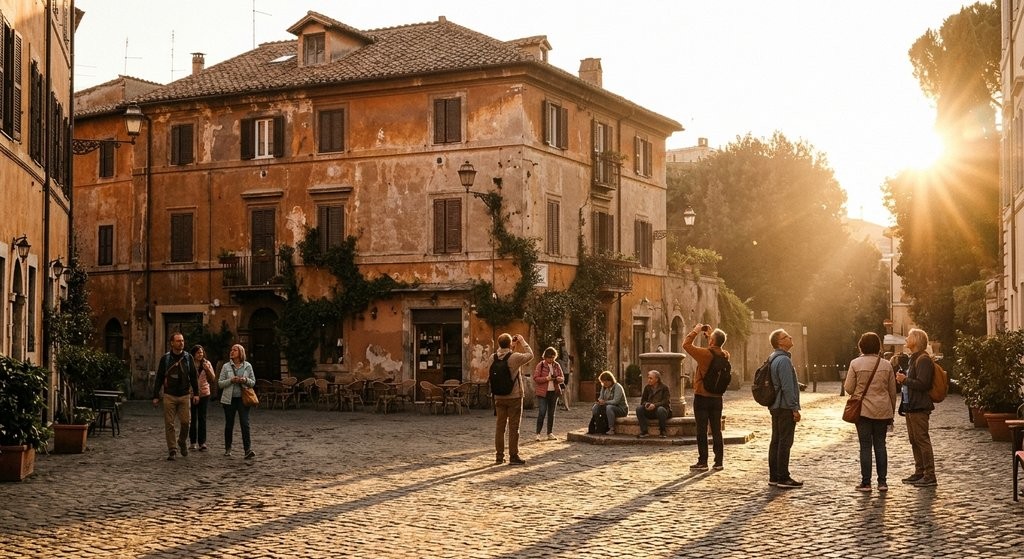
Tour days are built around a center: the midday block of sightseeing and meals. That center is exactly where landscape light dies. The edges of the day, the hour after breakfast and the ninety minutes before dinner, belong to you, and they are when towns and countrysides photograph themselves. My habit now is to claim one edge per day. A walk before the luggage goes down, or a detour after the coach parks for the night, twenty minutes each way from the hotel. Over a ten-day trip that is ten golden hours the rest of the group slept through.
The coach window is a tool
Driving days look like dead time for a camera and are not. The window seat on a moving coach produces a specific, honest kind of picture: the country between the sights, shot at seventy kilometers an hour. The tricks are few and learnable. Sit on the shaded side. Shoot through glass only when the glass is clean and the sun is behind you, and otherwise open the window at rest stops. Track the subject with the pan, so the road blurs and the farmhouse holds. Most of all, keep the camera in the hand, because a shutter lag of finding the bag costs you the church on the hill every time.
Day 6. Two hundred kilometers of nothing, and then a hayfield the color of the postcards we were sold. The driver slowed for a tractor and I got my picture.
Weather is a schedule, not a mood
Rain rewrites everything above, and not in the direction beginners fear. Overcast skies are the great equalizer of group travel photography: noon stops that would have been hopeless in sun become workable all day, colors stop burning out, and the coach's schedule stops mattering. Storm light, the fifteen minutes after a front passes, is the best light of any trip and it arrives on its own schedule, which is another argument for keeping the camera in the hand rather than the bag. My only genuinely great tour photograph, the one printed and framed, happened on a morning the group spent complaining under an awning, waiting for rain to stop. It stopped for ninety seconds. I was the only one standing in the street.
People, and the etiquette of the frame
Group travel offers what solo travel cannot: the same faces, repeatedly, in changing light. By midweek everyone relaxes into the trip, and the pictures stop being records of monuments and start being records of people. The rule I keep is consent at the table, candor everywhere else. Photograph the group from behind, watching the view. Photograph the dinner before anyone notices. And when the tour director poses sixty people under a porta, take the wide shot for them; it is the picture the whole bus will want, and it costs you nothing.
What the camera teaches about the trip
Here is the quiet discovery of eight tours: the discipline of chasing light improves the travel, not just the photos. Claiming the morning edge gets you the town asleep. Watching for the shaded side of the street gets you the quiet lane. Accepting the noon viewpoint and returning to it at dusk, if the hotel is close, gets you the double visit that most itineraries secretly allow. The schedule sets the places. The light picks the hours. A traveler who lets the second truth organize the free time comes home with the better pictures and, without ever meaning to, with the better memories.