I did not expect the dinners to matter. I booked my first group tour for the mountains and came home talking about a dining room in a wine town where the same waiter looked after us for three nights and learned, without ceremony, that the corner table wanted water for six and wine for the rest. Tour food has a reputation, mostly earned by bad examples, and my experience of it has turned out to be stranger and warmer than the reputation. It is also the part of the trip you feel three times a day, which is more than you can say for the cathedral.
Day 2, dinner. Soup, roast, a dessert with no name. Nobody photographed the food. Everybody cleaned the plate.
What is usually included, and what that means
Most group itineraries include breakfast daily and roughly half the dinners, with the rest left open. The included meals are rarely creative and almost never bad in the way people fear. They are banquet food at honest scale: a set menu chosen by a restaurant that feeds coaches every week, served fast enough that sixty people eat in ninety minutes. Breakfasts lean on the hotel's own kitchen and range from excellent, in family-run places, to institutional, in the big city boxes. The open evenings are where the region gets its chance, and where the trip either smells like itself or does not.
The rhythm of a set dinner
There is a shape to the included dinner that takes one night to learn. You arrive as a herd, you sit where the seating chart or habit puts you, the first course lands before the water glasses settle. Somewhere around the main course the group stops sounding like sixty strangers and starts sounding like a table. By dessert, plans for tomorrow are being argued happily across the aisles. I stopped fighting the set menu around my third tour and started reading it as a document: what the region grows, what the kitchen trusts itself to cook at volume, what the operator paid. All three answers are on the plate.
Day 5. The menu said mountain trout. The trout was from the river we crossed at noon. I have paid more for worse in cities that should know better.
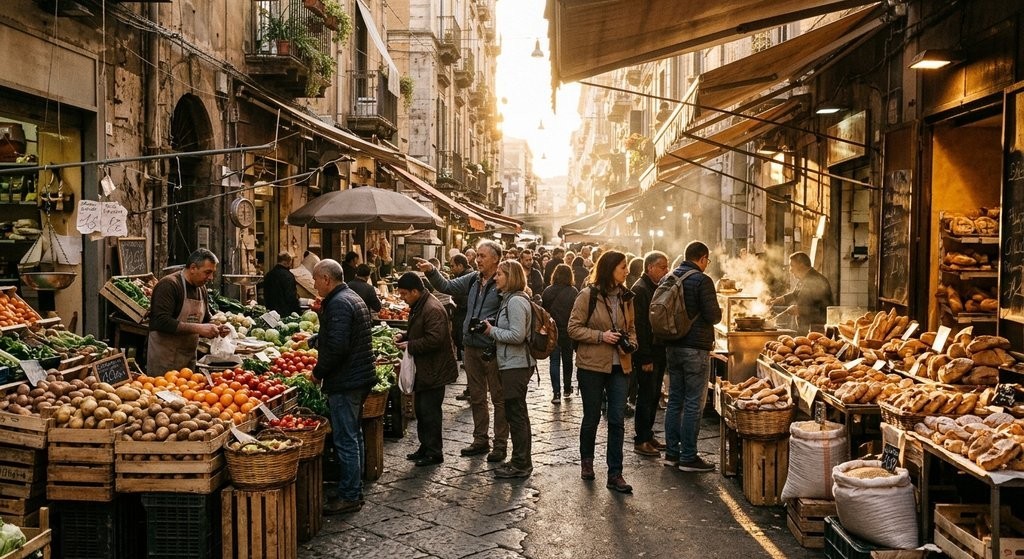
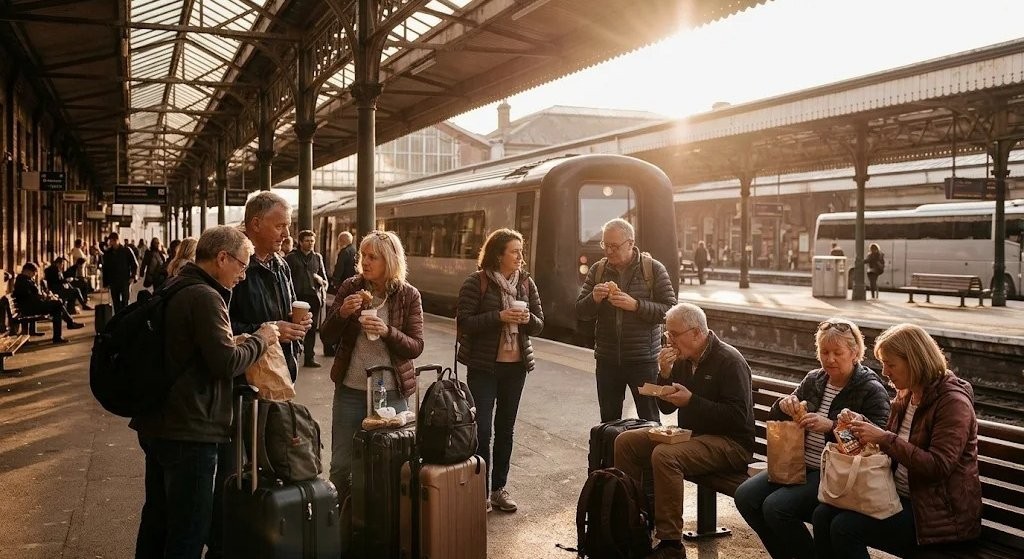
Between the two anchor meals sits lunch, and lunch is where group food is worst and easiest to fix. On program days it is often a set lunch at a place the operator uses weekly, and it is fine. On driving days it collapses into a service stop, which is the single least loved meal in group travel. The fix costs nothing: the night before, ask at the hotel desk where locals would stop on that road, or buy at the morning market and claim a picnic table at the first scenic pull-off. Half my best travel lunches were eaten standing up, from paper, with a view that no restaurant could license.
Free evenings are a skill
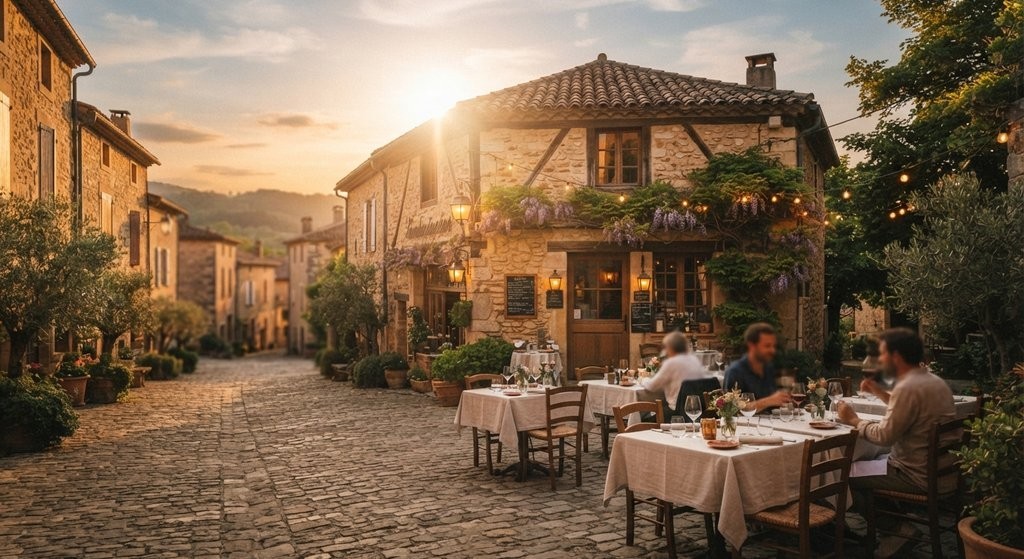
The unstructured dinner is the one people waste. Tired from the day's drive, they fall into the hotel restaurant by default and eat a second set menu, which is how tour food gets its flat reputation. The alternative takes fifteen minutes of daylight planning: ask the tour director at lunch where they would eat tonight, gather two or three people, and walk somewhere the coach cannot reach. The best meals of my group-travel years all happened that way, in rooms of eight tables with no coach parked outside.
Lunch deserves its own word. On driving days it is often a stop at a service area, and knowing this, I pack the afternoon: fruit from a morning market, bread, cheese that survives a hot bus without complaint. It is not romantic. It is the difference between a picnic at a viewpoint and a plastic tray in fluorescent light, and the price is a five-minute detour with a market bag.
What a year of menus taught me to order
There is also a practical skill in reading a tour menu the way a sailor reads weather. Dishes that survive volume cooking are the ones to choose: braises, roasts, stews, anything the kitchen can hold without dying. The risky items are the ones that demand timing, a steak to the minute, a souffle at all. Regional set menus know this and lean on it, which is why tour food in farm country so often outperforms tour food on the coast, where the whole point of the cuisine is freshness that a banquet cannot deliver. When the menu looks built for endurance, that is not laziness. It is the kitchen protecting itself, and the plate is usually better for it.
Eating well without fighting the group
Dietary needs are the other half of the story, and the mechanics are better than most people expect, provided you say things early. The operator needs restrictions at booking, the hotel needs them again at check-in, and the tour director needs them once more before the first included dinner. Say it three times and the kitchen finds a way on every continent I have tried. Say it once, at the table, and you will watch sixty plates arrive while yours is being invented.
My rules after eight tours fit in a pocket. Eat breakfast like it is the included meal it is. Treat set dinners as anthropology rather than cuisine. Spend free evenings deliberately and in company. And keep one market lunch in the bag for the long drive, because the best table on any tour is a stone wall with a view and no menu at all.