The coach is the easy part. It picks you up, it delivers you, it waits with the luggage locked and the driver reading a paper. The hard part is the six free hours after it parks, when the itinerary reads like freedom and the map reads like a test. Travelers who solve short-range transport well convert free afternoons into the best memories of the trip. Travelers who guess spend them in a taxi queue or, worse, in the hotel lobby, and the difference between the two outcomes costs about ten minutes of planning at breakfast.
The claim: the default choice is usually the wrong one
Most travelers reach for taxis at free time, on the theory that they are the simplest option in an unfamiliar place. The claim worth testing is the opposite: in the towns where group itineraries stop, walking and public transit beat taxis on speed as often as not, and on experience nearly always. The taxi's advantage is door-to-door legibility. Its costs are a fare that compounds by the hour, a conversation with a driver who has an agenda, and a windshield view of the exact streets a free afternoon exists to walk.
What the options actually deliver
| Option | Best range | Real cost | Main failure mode |
|---|---|---|---|
| Walking | 0 to 3 km | Free, slow | Underestimating heat, hills and return legs |
| Local transit | 1 to 10 km | A few dollars, some puzzle time | Timetable gaps on evenings and Sundays |
| Taxi or rideshare | Any | Highest, rises with waiting | Queue at the landmark, not at the hotel |
| Hotel advice | Variable | Free | Generalized tips tuned to yesterday's guest |
The evidence from the afternoon itself
The pattern repeats so reliably that it amounts to a natural law of free afternoons.
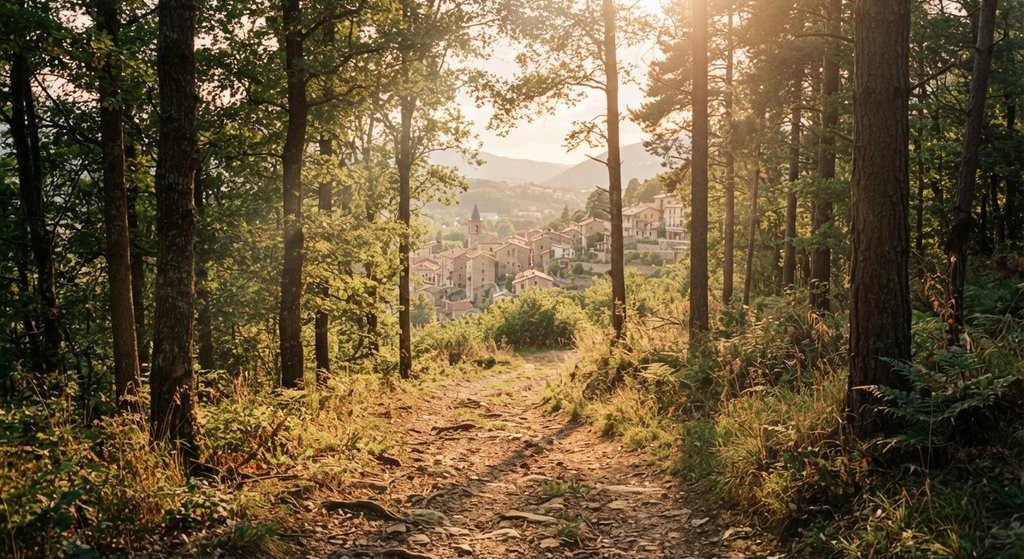
- The historic cores of most tour stops are compact by design; a hilltop town built before cars is a fifteen-minute walk end to end, and the taxi that serves it covers a distance you can cover twice as fast on foot through the lanes.
- Local transit in mid-sized towns is built for exactly the trips a free afternoon wants, out to the beach, up to the viewpoint, over to the market quarter, at a fare that makes experimentation cheap.
- The expensive mistake is rarely the first ride. It is the second, when the plan changed and the taxi becomes a hired clock.
- The best single source of routing is the tour director, who has walked these towns sixty times a year and knows which view is worth the stairs.
What the map does not say about evenings
Free time on tour comes in two flavors, the afternoon gap and the open evening, and they reward different choices. Afternoons favor the ambitious option, the transit experiment, the walk over the ridge, because the town is awake and the hours are generous. Evenings invert the arithmetic. Transit thins out after dinner, the walk back crosses districts that feel different in the dark, and the successful open evening is usually a close one: the square with the tables, the street with the music, the place you already found by day. I plan afternoons from the map and evenings from the hotel door, and the rule has never failed me. The traveler who drags the group on a forty-minute bus adventure at nine at night is not adventurous. They are the reason the group watches the clock.
The mechanism: matching range to terrain
The reason travelers choose badly is that they match transport to distance instead of to terrain and time. Distance is nearly irrelevant below five kilometers. What decides the experience is gradient, heat, paving and the clock: a two-kilometer climb at midday in August is a taxi ride, and the same two kilometers on a flat spring evening is the walk of the trip. Terrain also decides the return, which is the leg people forget to plan. A downhill walk out of the old town is free pleasure; the uphill return is the taxi fare that looked so unnecessary on the way down.
What it means for the traveler
Decision rule, learned across too many free afternoons. Inside three kilometers on flat or downhill ground, walk out and decide the return by how the legs feel at the turn. Beyond three, or uphill in heat, take transit if the timetable is posted and legible, and take the taxi only when the transit answer is no. Ask the tour director one specific question at breakfast rather than the hotel desk three questions at noon, and take the answer as routing rather than suggestion. Free afternoons are the quiet premium you paid for when you chose a group trip: the coach handles the kilometers, and the short distances left over are where the town actually lives.